
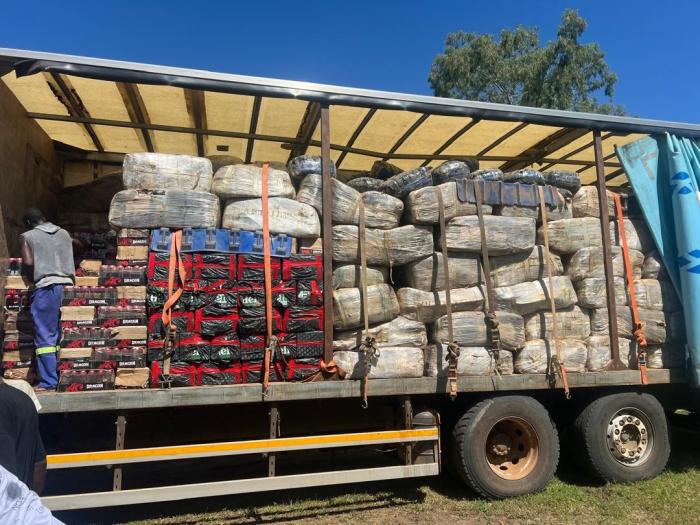
The Zimbabwe Revenue Authority (ZIMRA), during a routine enforcement operation led by its officials, successfully intercepted a 15-tonne consignment of smuggled meat products in Chiredzi at the Mutirikwi River area of Triangle, known as an increasingly popular smuggling corridor.
The interception occurred when the truck with Zimbabwean registration number plates AGZ 3488 was inspected and found to be carrying approximately 15 tonnes of meat and food products worth an estimated market value of ZWG 945,000.
The considerable cargo, which lacked supporting customs documentation, included 197 packages of 80kg chicken cuts and 7 packages of 10kg sausages, alongside polony, raising serious health and legal concerns.
"Enforcement operations and physical inspections are critical parts of ZIMRA’s mandate designed to safeguard Zimbabweans from harmful foods, substances and illicit drugs to protect public health," remarked Mr. Batsirai Chadzingwa, ZIMRA's Commissioner for the Customs and Excise Division.
Initial investigations indicate that the goods under scrutiny likely originated from South Africa, with several meat products bearing South African labels. The meat was transported unrefrigerated, which creates the risk and hazard of rapid spoilage in high temperatures and ultimately compromises food safety.
“In the end, it’s about protecting our community,” Chadzingwa added. “We urge transporters and importers to adhere to the designated routes and laid-down procedures. The consequences of non-compliance are severe, and we will not hesitate to enforce the law. ZIMRA will continue to fulfil its mandate; the message is clear: smuggling won’t be tolerated.”
Zimbabwean law states that foodstuffs cannot be imported without proper declaration or payment of duties and strict adherence to regulations regarding the importation of restricted goods is essential.
In addition to legal implications, the quality and safety of foodstuffs are of paramount concern in the interest of public health. The lack of refrigeration during transportation and the absence of necessary import permits ultimately threaten community health, making ZIMRA’s work even more critical.
ZIMRA is committed to continuously enforcing import control laws, which include detaining non-compliant consignments and ensuring that unsafe food products are promptly removed from circulation.
As ZIMRA continues to navigate the complex landscape of smuggling and enforcement, the Chiredzi interception serves as a reminder of the vital role of integrity in the food supply chain.
This incident sheds light on the persistent issue of smuggling in the region and highlights ZIMRA's commitment to safeguarding public health.